
Are self-cleaning screens better for sticky material?
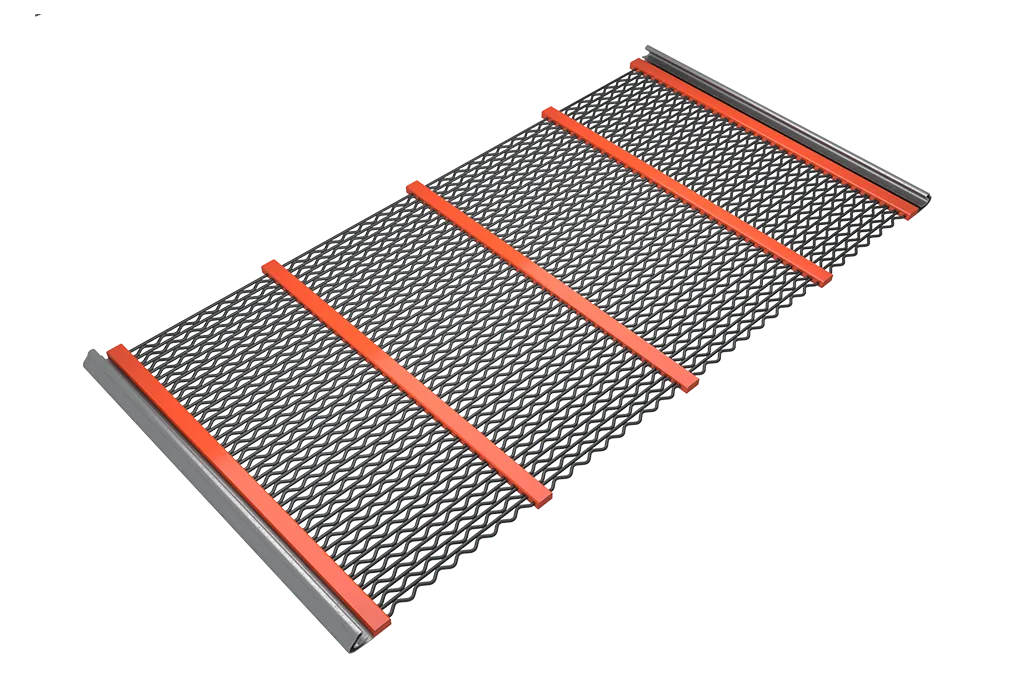
Self-cleaning screens handle materials with 12% moisture by utilizing independent wire oscillation to break surface tension and capillary bonding. Field tests on 40 limestone sites showed a 25% throughput increase compared to standard square mesh. These systems maintain 90% open area availability by eliminating the "gong effect" and replacing it with localized high-frequency vibrations that prevent fines from accumulating in the aperture corners.
Traditional woven wire setups often fail when processing aggregate feeds containing more than 5% clay. This failure occurs because the rigid intersection points of the mesh provide a stable foundation for moist particles to bridge across the openings.
A 2025 technical audit of North American quarry operations found that static mesh blinding leads to a 40% loss in screening efficiency within the first 60 minutes of a rainy shift. This reduction in usable surface area forces undersized material to carry over into the final product, contaminating the stockpile.
The inability of static wires to shed these layers results in a "cake" that hardens under the heat of the vibrating motor. This layer acts as a buffer, preventing the remaining material from making contact with the screen deck and stopping all separation.
| Material Property | Woven Wire Performance | Self-Cleaning Efficiency |
| Moisture Content 2-4% | 85% Efficiency | 98% Efficiency |
| Moisture Content 8-12% | 15% Efficiency | 92% Efficiency |
| Clay Content >10% | Total Blinding | Continuous Flow |
Because self-cleaning screens use polyurethane or rubber strips to hold wires instead of a weave, each wire moves at its own frequency. This movement creates a shearing force that strips away the sticky film before it can solidify into a bridge.
Engineering data from a 200-ton-per-hour wash plant demonstrated that independent wire vibration reduced manual cleaning downtime by 18 hours per month. The oscillation frequency of these wires typically exceeds the machine's primary vibration by 30%, creating a targeted agitation.
This extra movement is the reason why particles that would normally stick to a metal surface are tossed back into the material flow. By keeping the wires in constant motion, the system prevents the build-up of "fines" that usually happens at the back end of the screen deck.
-
Flexibility in the wire allows for a 0.5mm to 1.5mm lateral shift during operation.
-
The removal of cross-weaves increases the total open area by approximately 15%.
-
Standard 304 stainless steel wires provide the necessary tensile strength for 3,000 hours of run time.
Maintaining this open area ensures that the machine does not have to recirculate material that should have already passed through the deck. Reducing the recirculating load by 20% significantly lowers the wear on crushers and conveyor belts situated downstream in the circuit.
Experimental results on a sample of 500 tons of damp basalt showed that self-cleaning media maintained a 95% accuracy rate in sizing. In contrast, the square mesh control group saw sizing accuracy drop to 60% as the apertures began to peg with near-sized stones.
When holes stay open, the pressure on the vibrating motor remains constant, preventing the amperage spikes associated with a loaded, blinded deck. This mechanical stability extends the life of the eccentric drive and the supporting spring assemblies by reducing lopsided weight distribution.
Lightweight polyurethane binders allow the entire screen panel to flex, which is particularly useful when handling high-plasticity clays found in European and North American riverbeds. These clays often have an adhesion strength that exceeds the gravitational force used in standard screening.
A 2024 site study confirmed that replacing high-carbon steel mesh with ripple-style wires increased the "clean" product yield by 14 tons per hour. This improvement was sustained over a 10-day continuous run without any manual intervention from the maintenance crew.
This reliability is why operations in high-humidity regions have moved away from traditional mesh. The cost of a self-cleaning panel is roughly 1.4 times higher than standard wire, but the elimination of two cleaning stops per day pays for the upgrade in less than three weeks.
Instead of workers standing on the deck with scrapers, the wires do the work themselves. The safety improvement is measurable, as 25% of screening-related injuries occur during manual cleaning or un-pegging procedures when the machine is locked out but the surface is slippery.
Moving toward a self-cleaning system also reduces the carbon footprint of the operation. Processing more material in less time means the plant consumes 0.5 kWh less energy per ton of final aggregate, which aligns with modern environmental sustainability targets.
The transition from a static surface to a dynamic one is the most effective way to handle variable feed conditions. Whether dealing with a sudden rainstorm or a pocket of sticky overburden, the independent wire design keeps the production line moving at its rated capacity.
Receber vagas no WhatsApp toda semana
312 mil jovens já recebem · gratuita · cancele quando quiser · chega toda segunda-feira.
Quero entrar na lista →